
Universal Hardscapes
How Often Should You Seal Pavers in Florida? Wet-Look vs Natural Sealers Explained
Before deciding to seal, review Universal’s product warranty: sealing voids the warranty under its current terms. For suitable surfaces where sealing is chosen, Ultra Wet Look has a typical 2–3-year reseal reference, depending on exposure and wear. This is product-specific guidance, not a schedule for every paver, stone or sealer.
Care & maintenance · Universal Hardscapes
Published
Questions? Call Universal Hardscapes at (813) 884-0010.
Do pavers need to be sealed at all?
Do pavers need to be sealed?
Sealing is optional, and the exact material, treatment and warranty determine whether it is appropriate. Universal’s current product warranty states that sealing voids the warranty. Review the warranty terms before choosing a treatment. Compare these product-specific factors:
- Check the stated protection and limitations for the exact product; do not assume every sealer prevents UV fading.
- Compare stain-resistance and cleaning instructions for the material and treatment.
- Confirm joint-sand compatibility; stabilization claims depend on the chosen product and installation.
- Compare the appearance, from a natural finish to a glossy wet look.
A sealer does not make a surface stain-proof or establish wet-slip suitability. Follow the exact product instructions and warranty before treatment. For material care, see Concrete Pavers vs. Natural Stone: Durability and Care.
How often to reseal in Florida (and signs it’s time)
How often do you reseal pavers in Florida? Do they really need it every year?
Ultra Wet Look’s published reseal reference is approximately 2–3 years, depending on exposure and traffic wear. Assess the actual surface and follow current product instructions; this is not a universal interval for all Florida paving.
Changes such as these warrant inspection and diagnosis, rather than automatic recoating:
- Water stops beading and soaks right in
- Color looks dull or dusty, even after cleaning
- The shine is patchy, glossy in some spots and flat in others
- Joint sand is washing out or weeds are moving in
When to seal new pavers
How long should I wait to seal brand-new pavers?
Do not use a blanket waiting period for new concrete pavers. Check the paving and sealer manufacturer’s current curing, preparation and application requirements. Diagnose any efflorescence or haze before coating, and review the warranty first.
If you see white haze, ask a qualified professional to identify the cause and compatible treatment. Do not assume it is efflorescence or cover it with another coat.
Wet-look vs natural-look sealers
Compare appearance only after confirming compatibility, application conditions and warranty implications. Neither finish is suitable for every surface.
Wet-look sealer: richer color and shine
A wet-look sealer is intended to deepen color and add sheen. Test the exact product on a small, inconspicuous area to assess the appearance before full application.
Appearance: a wet-look product can deepen color and add gloss. The result depends on the surface, preparation and application.
Maintenance and wet use: Ultra Wet Look’s typical reseal reference is 2–3 years, depending on conditions. Ask for wet-slip information for the treated surface; gloss or an additive alone does not establish pool-deck safety.
Natural-look sealer: closer to bare paver
A natural or matte sealer keeps your pavers looking close to how they did unsealed, with little or no shine.
Appearance: a natural-look product aims to retain a less glossy finish. Maintenance needs still depend on the exact sealer, material and exposure.
Cons - Doesn’t add the color boost or shine of a wet look - It’s harder to tell by eye when it’s worn off
Prefer a natural look? Ask about compatible options and review the warranty before choosing a treatment.
About Universal’s Ultra Wet Look sealer

Universal Hardscapes carries Seal-N-Lock Ultra Wet Look Paver Sealer. Here’s what to know before you buy:
- Type: a glossy wet-look, modified acrylic urethane sealer in a 5-gallon pail, made by Seal-N-Lock.
- Coverage and coats: about 150 to 200 sq ft per gallon, depending on paver texture, joint width, and how absorbent the surface is. At least 2 coats are recommended, typically 1 flood coat followed by 1 top coat.
- Mixing: dilute 1 part water to 1 part sealer, mixed thoroughly for 2 minutes before use.
- Dry and cure time: about 1 hour to dry in sunny areas; shade, high humidity, or cooler temperatures extend it. Foot traffic after 24 hours, vehicles after 48 hours. Avoid sharp turns or sudden braking while it cures.
- Joint sand: designed to stabilize standard joint sand, reducing the need for polymeric sand in applicable installations. If polymeric sand is already installed, it must be completely cured, bone-dry, and dust-free before sealing, or you may trap a white haze.
- Pool decks: request wet-slip information for the exact treated surface and use; confirm suitability with the project professional.
- Natural stone: suitable concrete pavers, clay pavers, travertine, and natural-stone surfaces may be compatible. Natural stone may absorb sealer differently than concrete, so apply thin, even coats and avoid pooling. Confirm compatibility with the exact material and test an inconspicuous area first.
Container size alone doesn’t tell you coverage, coats, or the final result. Tell us about your pavers and any previous sealer, and we’ll share current instructions and confirm compatibility, prep, and application.
Want to add sealer to your paver order? Call (813) 884-0010 or request a quote. Contact our team to confirm delivery availability and scheduling.
How do I make the wet look permanent?
The wet look is not permanent. Assess the surface and follow the chosen product’s recoating instructions, including compatibility with previous treatments. Do not add coats solely because a calendar interval has passed.
Can I reseal a new patio with a wet-look sealer?
First check the warranty and whether treatment is appropriate. Confirm curing, preparation and compatibility with any previous coating using the current manufacturer instructions; a new patio is not automatically ready for sealing.
Picking your weather window in Florida
These are preparation topics to discuss for Ultra Wet Look, not a substitute for its current label or instructions for another sealer:
- Clean the pavers. Remove dirt, stains, and any efflorescence.
- Let them dry completely. Moisture trapped under sealer can cause a cloudy haze. Follow the product instructions for dry time after washing.
- Check the joint sand. Top off or replace sand, and make sure it’s compatible with your sealer.
- Apply at least 2 coats. For Ultra Wet Look, that’s typically 1 flood coat followed by 1 top coat. On natural stone, keep coats thin and even to prevent pooling.
- Let it cure. With Ultra Wet Look, wait 24 hours for foot traffic and 48 hours for vehicles.
How long should you wait after cleaning before sealing?
Wait until the pavers are completely dry, including the joints. In Florida humidity, that can take longer than you’d expect. Follow your sealer’s label for the minimum dry time.
Can I seal pavers in the summer?
Only if the product’s specified temperature, surface-moisture and weather conditions can be met throughout application and curing. Morning application alone does not establish suitable conditions.
What happens if it rains after sealing?
Rain can affect a fresh coating. Ultra Wet Look’s approximate one-hour dry reference in sunshine is not a rain-safe or full-cure guarantee; confirm the required weather window and response with the manufacturer.
Common sealing mistakes
- Sealing new pavers without checking curing, surface condition and manufacturer instructions.
- Sealing wet pavers, which can trap moisture and leave haze
- Letting sealer pool or puddle, especially on natural stone
- Applying outside the product’s permitted temperature or weather conditions.
- Mixing products that don’t work together, like a sealer and joint sand that aren’t compatible
Is the sealer compatible with polymeric sand?
Confirm compatibility with the exact polymeric sand and any previous treatment. Ultra Wet Look’s published guidance requires existing polymeric sand to be fully cured, completely dry and free of dust or residue; that preparation does not establish compatibility with every sand.
Sealing natural stone
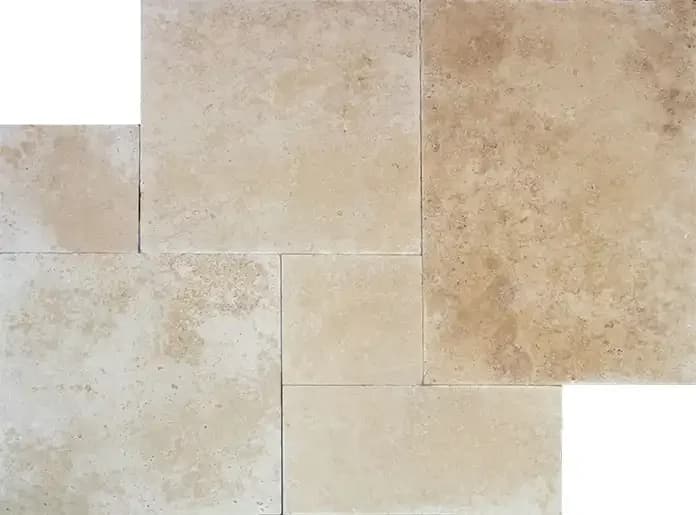
This guide is about concrete pavers. Our travertine and Shell Stone (tumbled) and marble (leathered) are natural stone. Ultra Wet Look can be used on suitable natural-stone surfaces; confirm compatibility with your exact material and test an inconspicuous area first. Keep coats thin and even to prevent pooling. For stone care, see our shellstone pool deck guide, Does Travertine Get Hot?, and Travertine vs Concrete Pavers for Tampa Bay Pool Decks. Browse our travertine and natural stone collections, and see our pool coping guide if you’re redoing the pool edge too. Not all natural stone needs sealing. Universal’s current product warranty states that sealing voids the warranty. Review the warranty terms before choosing a treatment.
DIY or hire a pro?
Assess the product instructions, equipment and surface condition before choosing how to proceed. Universal Hardscapes does not offer sealing services. Use Find a Contractor to enquire about an independent professional, and review How Much Do Pavers Cost in Tampa Bay? when planning a new project.
Frequently asked questions
How often should you reseal pavers in Florida?
Ultra Wet Look has a typical 2–3-year reseal reference, depending on exposure and traffic wear. Dullness or a change in beading calls for assessment; it is not proof another coat is needed.
How long should I wait to seal brand-new pavers?
Use the current paving and sealer instructions, not a universal 60–90-day waiting period. Check curing, surface condition, compatibility and warranty implications before proceeding.
Can I reseal a new patio with a wet-look sealer?
Only after reviewing the warranty and confirming curing, preparation and compatibility with any previous coating. Do not assume every new patio should be sealed.
How long should you wait after cleaning before sealing?
Until the pavers and joints are completely dry. Follow your sealer’s label for the minimum dry time.
How do I make the wet look permanent?
A wet-look finish needs product-specific maintenance and is not permanent. Inspect before recoating and follow current manufacturer instructions.
Can I seal pavers in the summer?
Only when the current product instructions’ temperature, moisture and weather requirements can be met. A morning start or a dry forecast alone is not enough.
What happens if it rains after sealing?
Ask the manufacturer how to assess rain-affected coating. Ultra Wet Look’s approximate one-hour sunny dry time does not establish when rainfall is safe.
Will sealing make pavers slippery?
A treatment can change wet-slip behavior. Request information for the exact treated surface and intended use; a glossy finish or an anti-slip additive is not a safety guarantee.
Is the sealer compatible with polymeric sand?
Ultra Wet Look is designed to stabilize standard joint sand in applicable installations. For existing polymeric sand, confirm exact-product compatibility and follow the requirement for fully cured, completely dry, dust-free sand.
Does Universal Hardscapes seal pavers?
No. We supply pavers and sealer. Find an independent contractor on our Find a Contractor page. See our Warranty Terms & Conditions for coverage, conditions and claim instructions.
Review before sealing
- Before choosing Ultra Wet Look, review the warranty terms. Call (813) 884-0010 or request a quote for a compatible product. Same-day or next-day delivery is available throughout Tampa Bay and to job sites approximately 100–120 miles around Tampa. Call (813) 884-0010 to confirm product availability, quantities, delivery address and timing.
- Browse sealer and accessories on our accessories page, or see concrete pavers.
- See our showroom locations page for the Tampa homeowner showroom at 6005 Anderson Road. The manufacturing plant serves contractors only.
- Find a sealing contractor.
Have another question? Check our FAQ page.
Planning a project?
Talk with Universal about the materials, samples and pricing for your project.
Request PricingContinue reading
Material selection
Does Travertine Get Hot? How Pool Deck Materials Compare in the Florida Sun
Does travertine get hot in Florida sun? Learn how color, finish and shade affect pool deck comfort, and compare materials at Universal Hardscapes.
Read article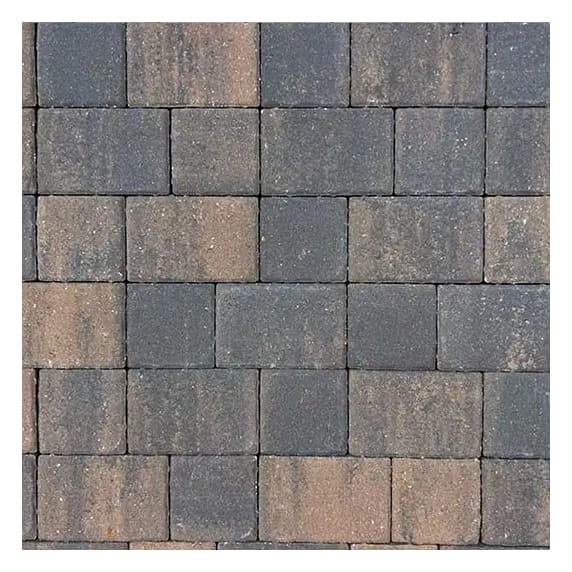
Project planning
How Much Do Pavers Cost in Tampa Bay? The Factors That Drive Your Price (2026)
What drives paver cost in Tampa Bay: material, quantities, pattern, site preparation and labor. Learn how to request comparable material and installation quotes.
Read article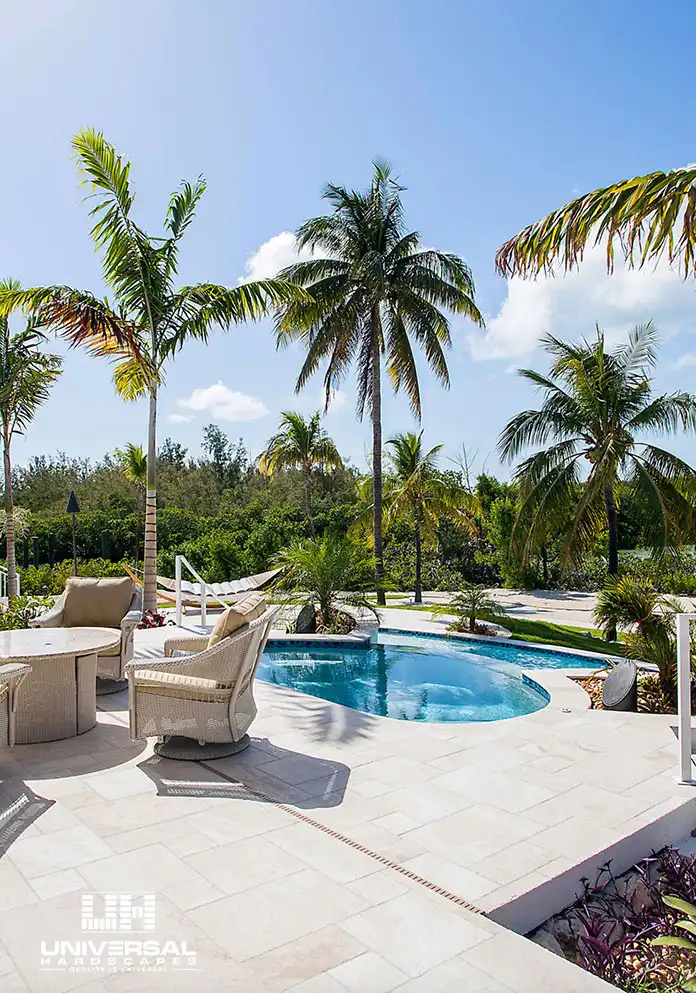
Material selection
Travertine vs Concrete Pavers for Tampa Bay Pool Decks
Compare travertine and concrete pavers for a Tampa Bay pool deck. Review appearance, care, product suitability and questions to ask before ordering.
Read article